 |
|
|
- Home
- Ambling Along
the Aqueduct - The Cascadia
Subduction Zone
- The Aqueduct Bulletin
- Subscribe to our
e-newsletter
- Catalog for 2024-2025
- Our Mission
- Submission
Guidelines

info@aqueductpress.com
PO Box 95787
Seattle, WA 98145-2787
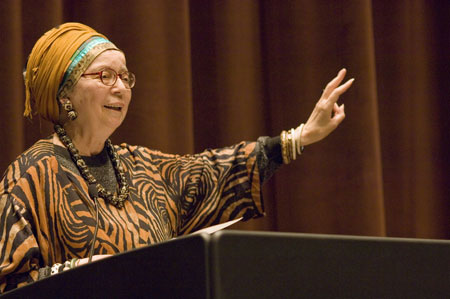
J. T. StewartI consider my writer self as a story teller––one who writes narrative poems that turn up in my head as voices w/stories to tell. These folks give me some phrases––usually their starting lines––and off we go. They speak––I transcribe. The more talkative ones can go on and on––sometimes at great length for pages and pages. With some, their complexity baffles me––always they surprise me. And sometimes I have to do research to justify what they say. I seldom––if ever––use metaphors to craft or revise poems, at least on a conscious level. I can see the value of the term for readers, but metaphors scare and annoy me. – JT Stewart, Stone Telling magazine LINK: http://stonetelling.com/issue9-feb2013/rios-st9-roundtable.html Long influential and respected in the Seattle literary arts community, JT Stewart has served as teacher, mentor, and inspiration to many hundreds of poets and writers. Originally from the Bronx, she commuted by subway as a teenager to attend the High School of Music and Art in Harlem––the same school that later nurtured Samuel R. Delany, Janis Ian, and Jonathan Lethem. She attended Fisk University, a historically Black liberal-arts land-grant college in Nashville, Tennessee, where she was a member of Alpha Kappa Alpha, one of the “Divine Nine” historically Black sororities. At Fisk, she studied with Robert Hayden, an outstanding poet of the African-American experience. She graduated Fisk in 1949 with a Bachelor of Arts degree. After Fisk, she attended Wellesley College and then Fordham University, where she earned a Master of Arts degree in 18th Century Literature. As a young woman, living and working in New York City, she was a member of the Harlem Writers Guild. JT moved to Seattle with her then-husband, a minister, in the early 1950s. She taught there at the University of Washington and Seattle Central Community College, and has for many years been a respected member of the literary and theatrical communities. She worked as a playwright with three small theaters that have long-since since shut their doors: the Alice B Theater, the Empty Space Theater, and the New City Theater, guided by director Susan Finque and artistic directors Ricky Rankin, Kurt Beattie, and John Kazanjian. In addition, she studied with two influential playwrights, both women of color: Cuban-American Maria Irene Fornas, and African-American Susan Lori-Parks, a recipient of the Pulitzer Prize. As an administrator, JT directed and named the Langston Hughes Cultural Arts Center and, with Vonda McIntyre and Ursula Le Guin, co-founded the Clarion West Writers Workshop. She was a curator of the Jack Straw Writers Program, and served as a teacher for many years at Richard Hugo House, a gathering spot for in central Seattle for both writers and readers. She was also deeply involved with the Hedgebrook community of women writers, where she served on the board of directors. A distinguished-writer’s scholarship was established there in her name. She later taught at Fairhaven College, part of Western Washington University in Bellingham. After retiring from Fairhaven, she continued to mentor and encourage younger writers in Seattle. JT’s poetry has been published widely in poetry magazines and in the chapbooks Nommo, Promised Lands, and Love on the Rocks – Yet Again. Her collaborative work includes co-editing two books: Gathering Ground: New Writing & Art by Northwest Women of Color (Seal Press), and Seattle Poets and Photographers: A Millennium Reflection (University of Washington Press). She also was a member, with artists Carl Chew, Ron Hilbert, and Mare Blocker, of the artistic team commissioned to create Raven Brings Light to This House of Stories, a permanent installation at the University of Washington’s Paul Allen Library. JT Stewart still lives in Seattle, where, in May of 2026, she celebrated her 98th birthday. Considering everything she’s done over the course of her long life, both for individual writers and for her communities, it is amazing that she has found any time at all to write poetry. I use poetry (primarily non-linear) to free myself from the shapes of prose w/its sentences, its Aristotle based logic/its punctuation rules, its grammars. With this freedom I can create/explore imagined worlds.… Plato didn't trust the poets. Why should we? JT Stewart Stone Telling magazine LINK: http://stonetelling.com/issue9-feb2013/rios-st9-roundtable.html
(*) Photo: Stone Telling, 2013 |